A closer look at how the current Game Boy-inspired model comes together. Electronics and accessories shown depend on the selected configuration. These build photos show the parts, the progress, and the details you can expect to see up close.
01
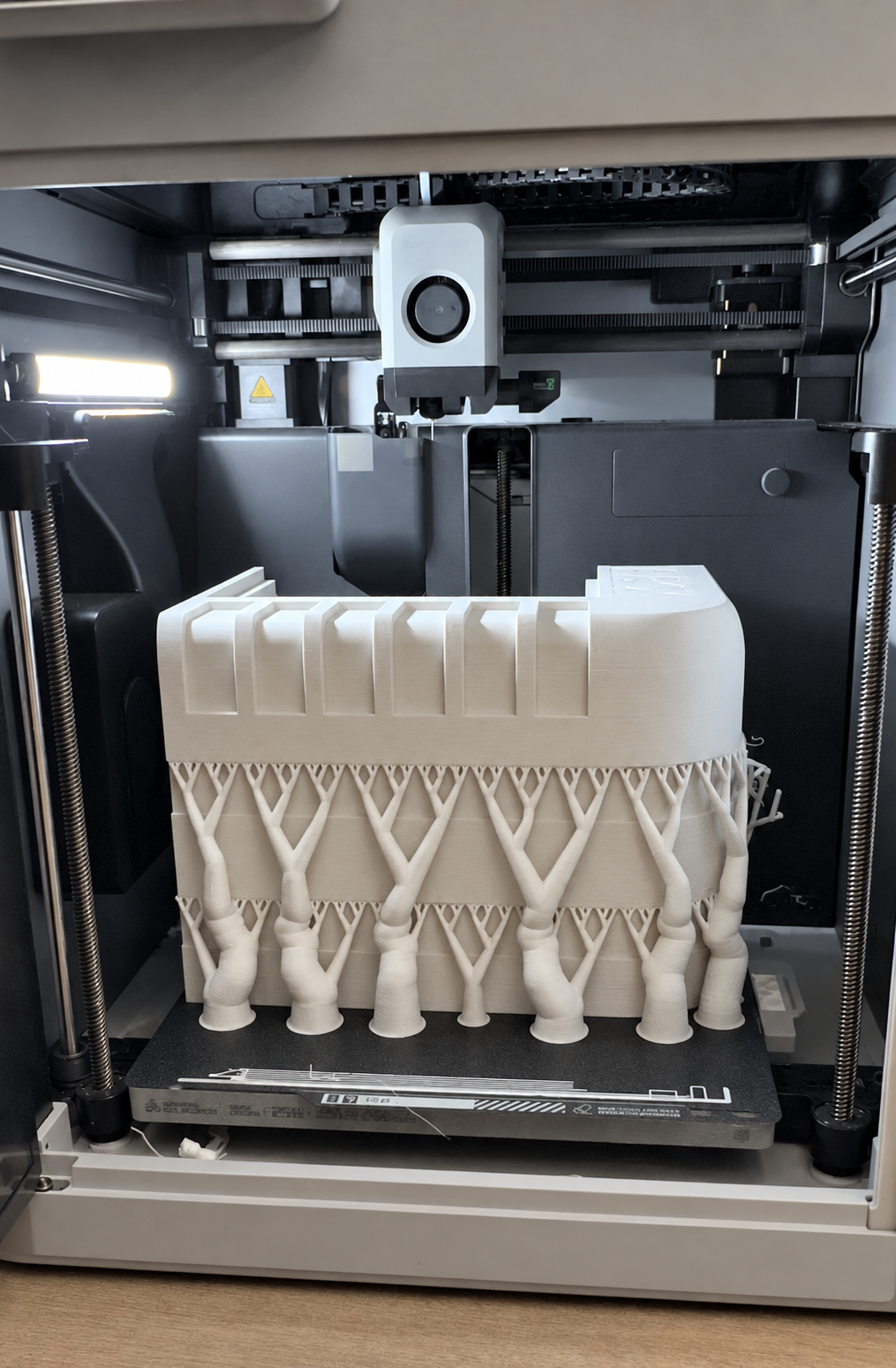
It starts with a print.
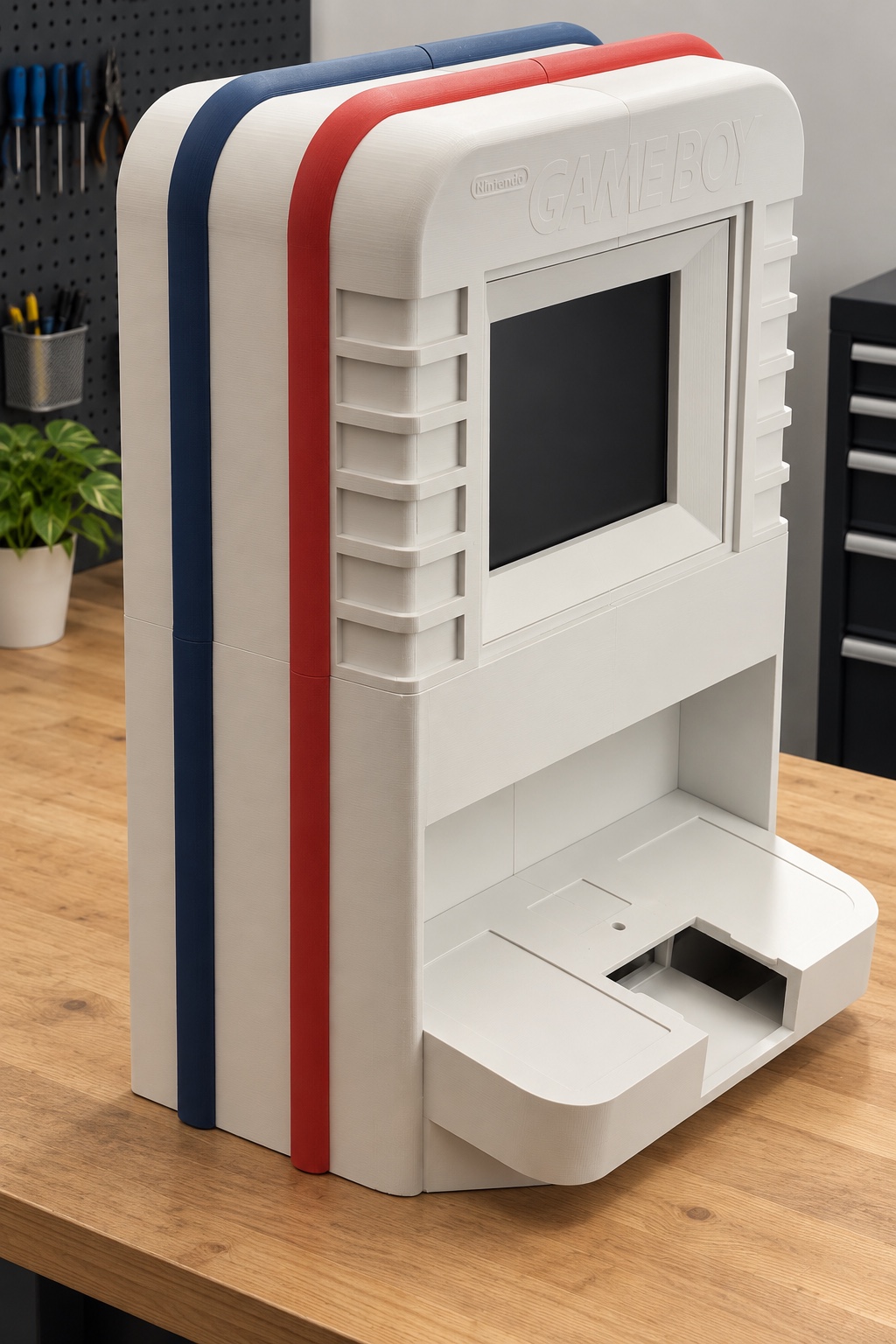
This model begins on a Bambu Lab X1C, using approximately 4.21 kg of filament and around 110 hours of printing to produce the full set of parts. Layer by layer the frame, trim, and smaller components take shape—before assembly even begins.
02
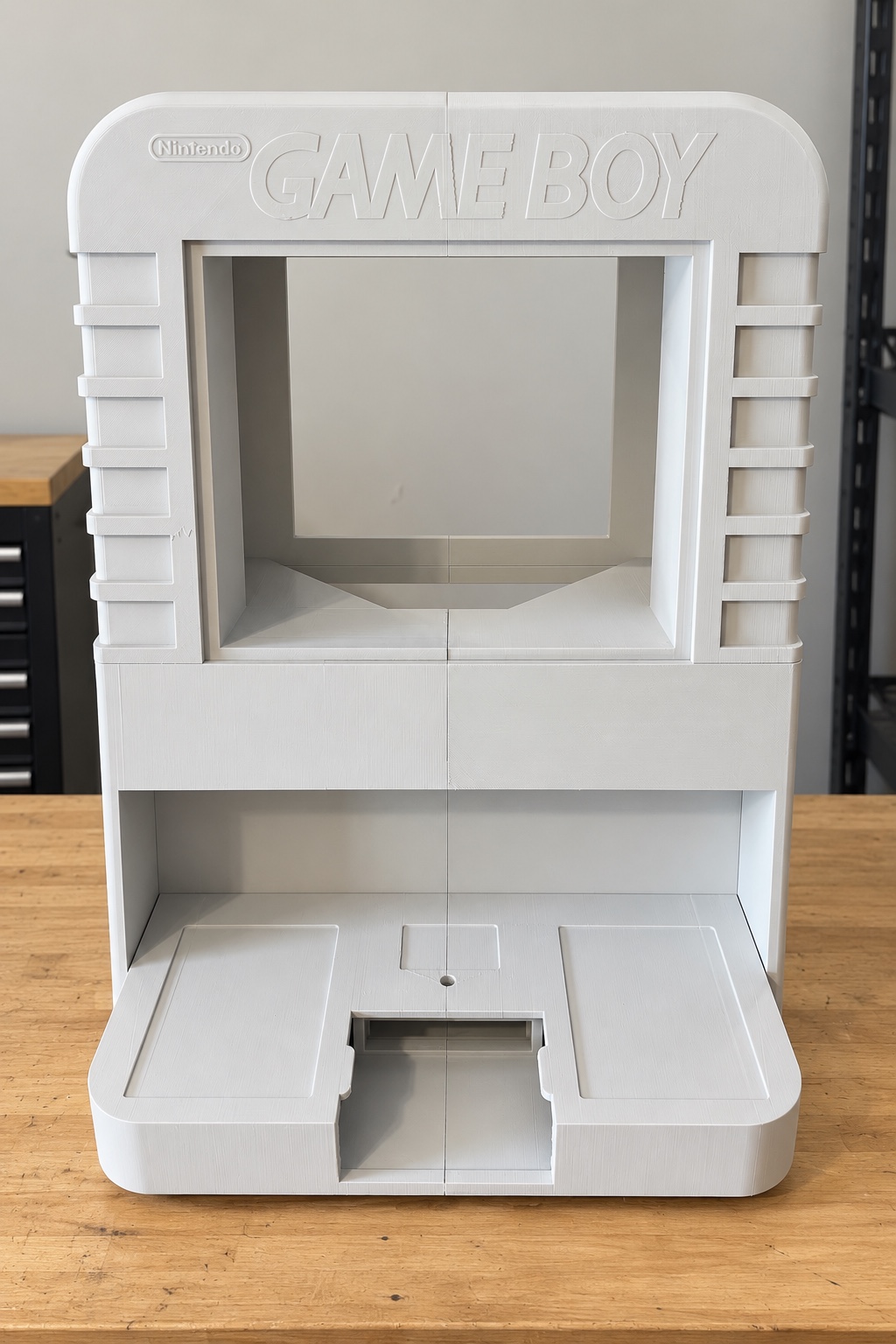
Bringing the frame together.
Once printing is complete, the supports are removed and any rough edges are sanded smooth. The printed sections are aligned and glued together, bringing the frame into shape. The bezel is then glued to the TV, forming the screen assembly that fits into the kiosk.
03
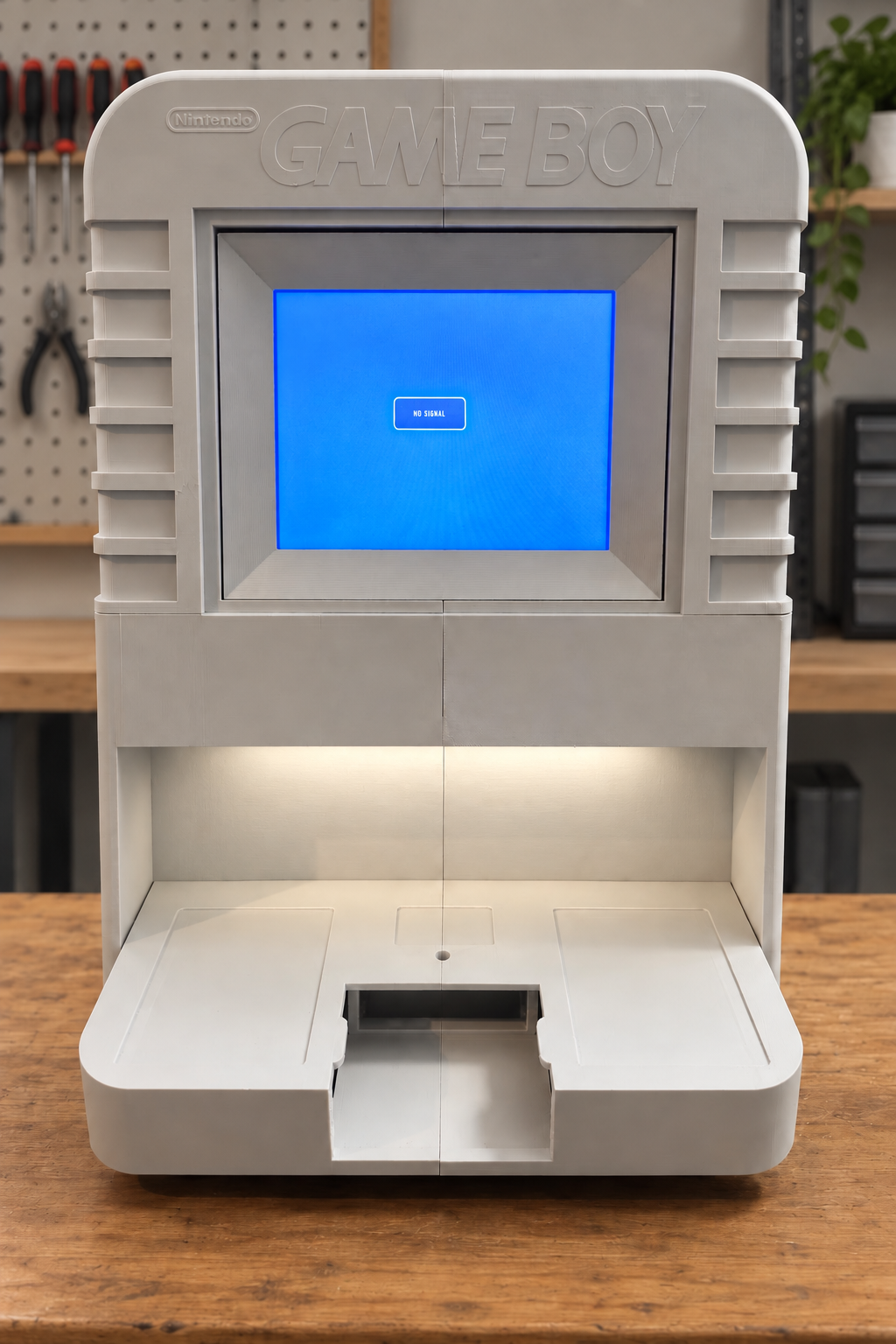
Bringing the electronics together.
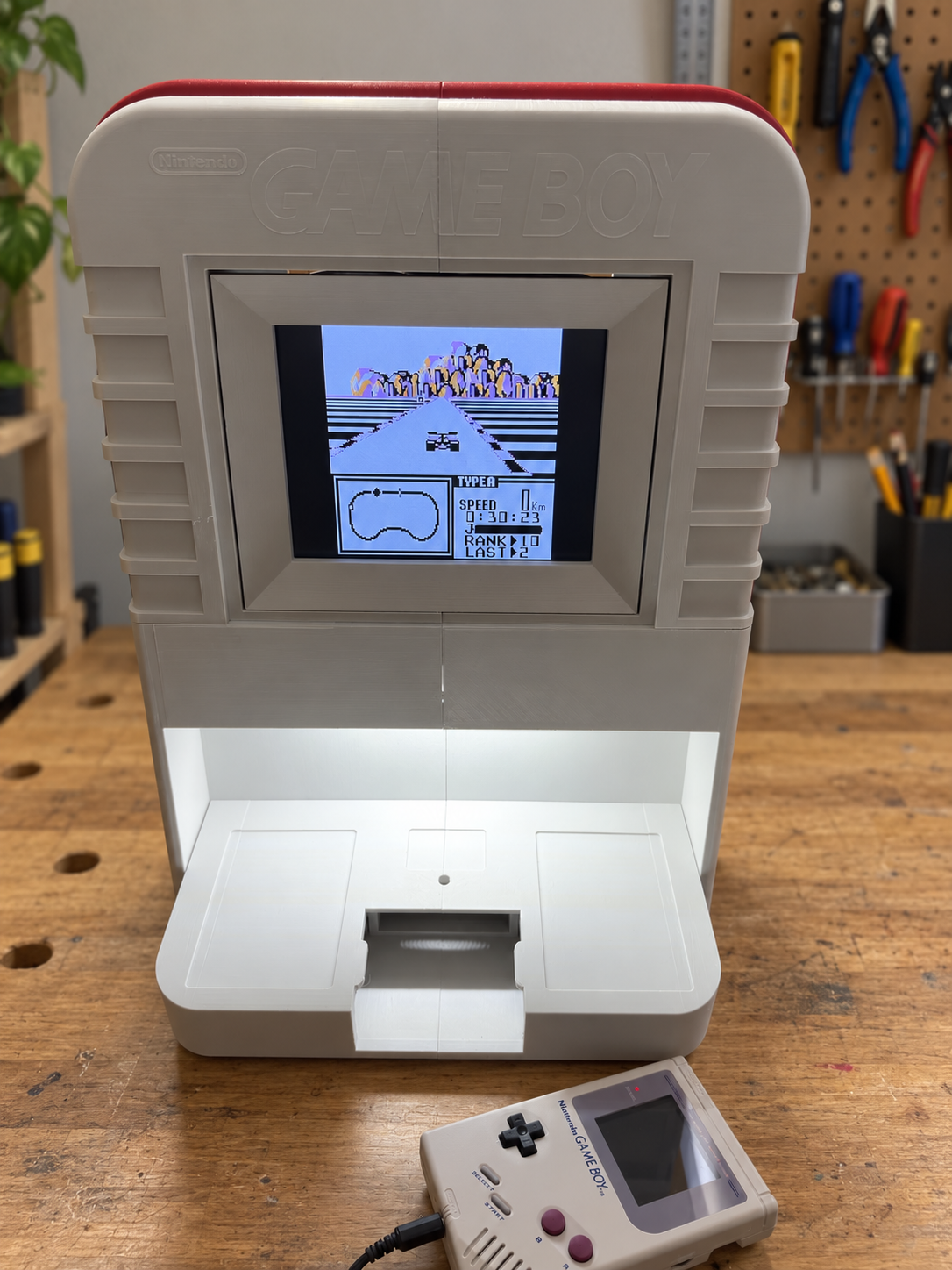
The speakers are wired first, followed by securing the display and mounting the speakers inside the kiosk. The light bar is then installed to illuminate the lower display area. Finally, all wiring is routed through the enclosure, bringing the screen, sound, and lighting together.
04
Adding the finishing touches.
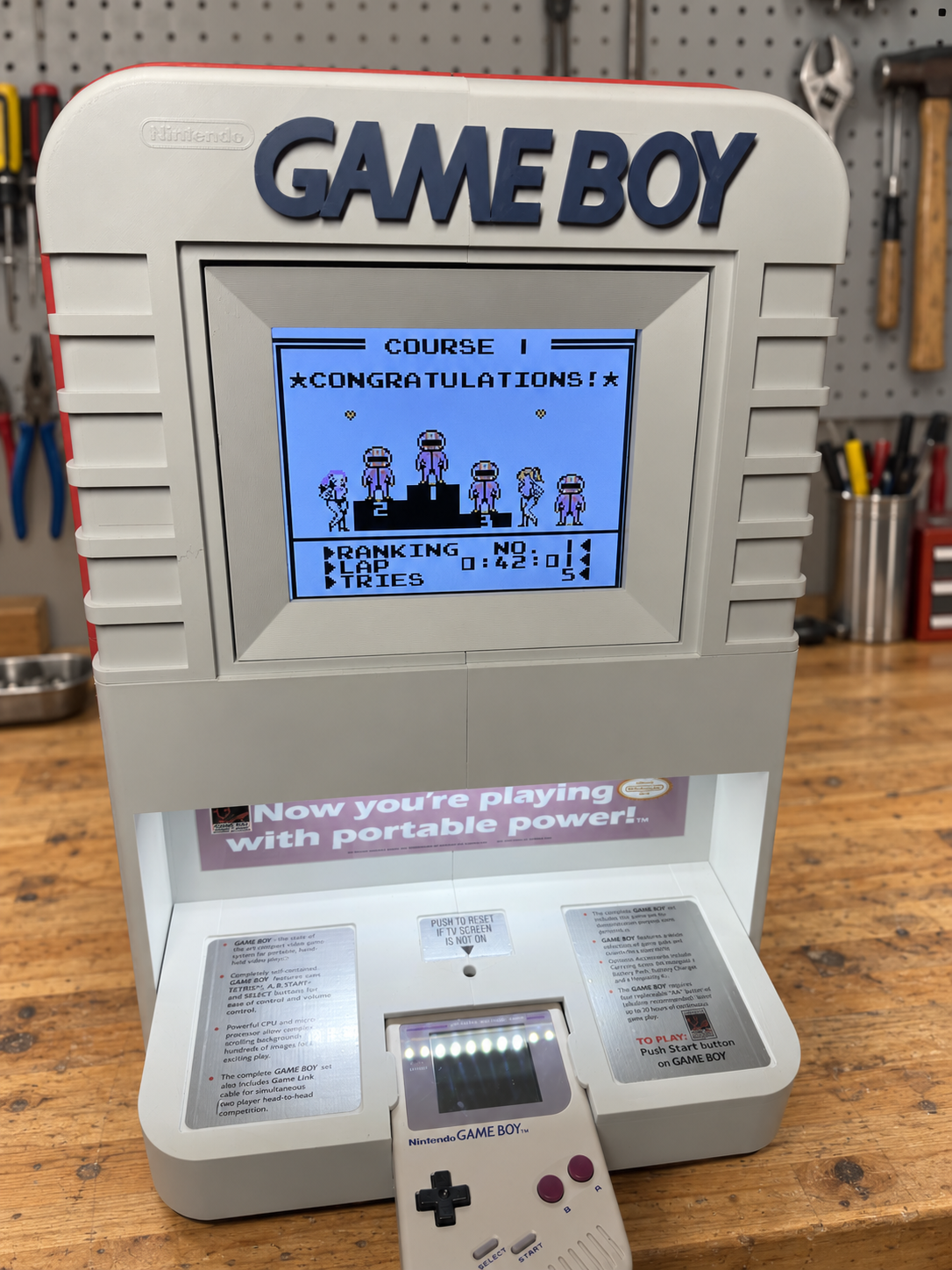
The colored trim and lettering are glued into place, giving the kiosk its distinctive look. A decorative, non-functional reset button is also installed. If decals are included in the order, they’re applied at this stage to complete the chosen finish.
05
Building and testing the Game Boy mod.
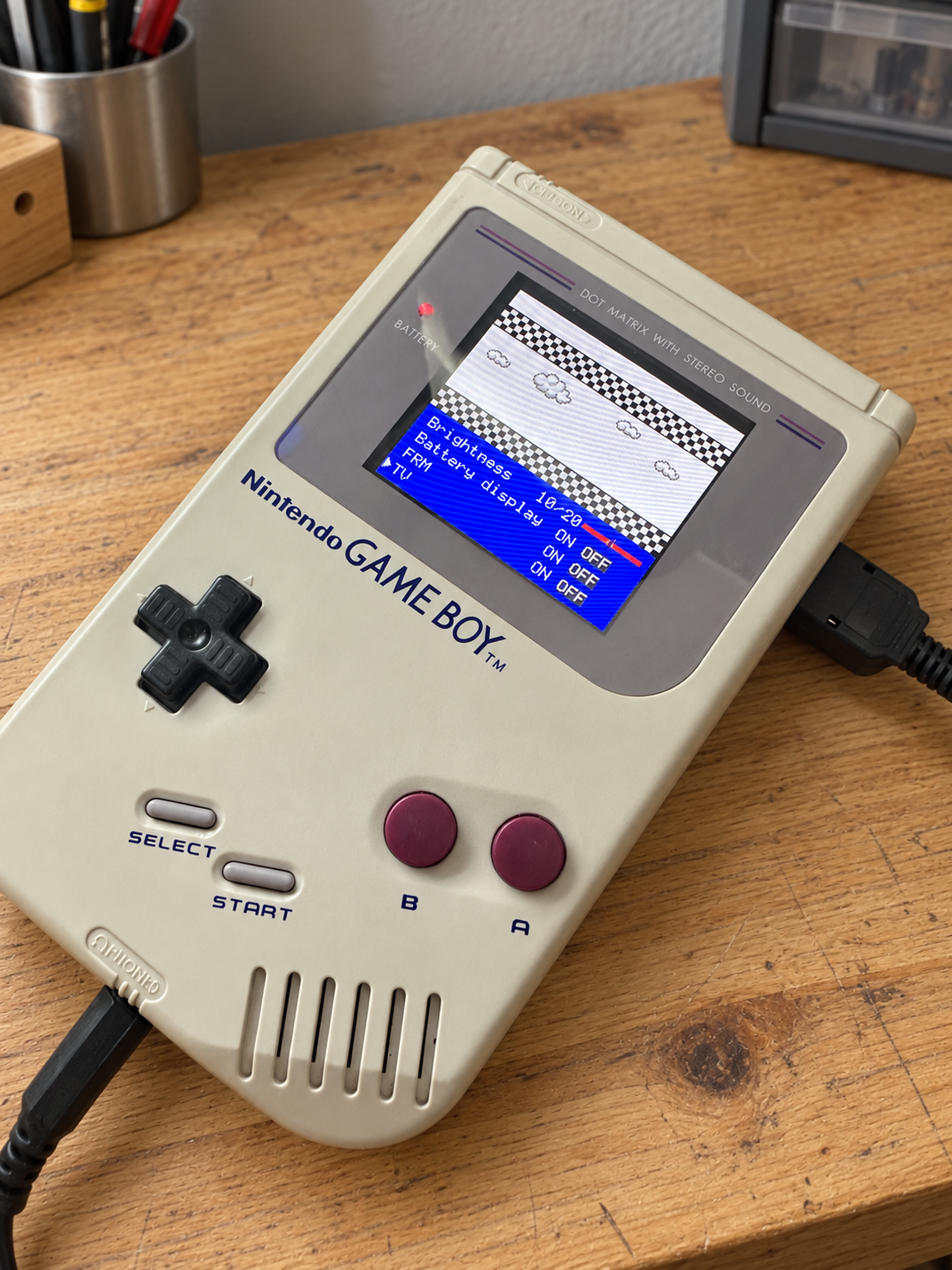
The Game Boy is fitted with the HighSpeedIDO DMG mod and tested. The handheld’s display settings are checked, then it is connected to the kiosk to test the game on the larger screen. These two views show the modified handheld and the connected setup in use.
06
Final assembly and testing.
The Game Boy is secured in its holder, and the completed kiosk goes through its final checks. Gameplay, controls, sound, the display, and lighting are tested together to confirm everything works as it should.
AN HONEST LOOK, UP CLOSE
3D printing leaves a fingerprint.
Layer lines, joins between printed sections, and small surface variations are part of this process. You can see them in the photos throughout this page.
The assembled model shown is made from printed parts, so its finish has a texture of its own. These close-up views help you know what to expect before choosing your build.
BEFORE YOU ORDER
Know your build.
Made to order2–3 weeks before shipment30-day limited warranty
Shipping and applicable sales tax are additional. Submitting an order request does not charge you. If accepted, you’ll receive a separate PayPal invoice. Payment is required in full before production begins.
Cancellations & Returns
Cancellations
Orders may be cancelled for a full refund before production begins.
Once printing, hardware preparation, or production has started, cancellations are subject to a 20% cancellation fee to cover committed material, machine time, and components.
Custom Build orders become non-cancellable and non-refundable once production begins.
Returns
Because each product is made to order, returns are generally not accepted for:
buyer’s remorse
color preference changes
normal 3D-print characteristics
minor cosmetic variation inherent to handmade or vintage hardware
A wrong order, shipping damage, or obvious defects must be reported to Save Point Foundry within 7 days of delivery, with photos when appropriate. Qualifying manufacturing or warranty defects remain covered for 30 days beginning on delivery under the applicable warranty.
Remedies depend on the issue and the applicable Printed Parts Kit or Assembled Kiosk warranty below.
Shipping Damage
Shipping damage must be reported within 7 days of delivery.
Customers should provide:
photos of the shipping box
photos of the internal packaging
photos of the damaged area
order information
Visible damage should be photographed before the product is fully removed from the packaging whenever possible.
Printed Parts Kit Limited Warranty
The Printed Parts Kit includes a 30-day limited warranty for qualifying manufacturing defects in printed components as delivered by Save Point Foundry, beginning on the delivery date.
What is covered
Missing printed parts
Printed components arriving cracked or structurally damaged
Severe warping or manufacturing defects that prevent intended assembly
Material or print failure attributable to Save Point Foundry
Shipping damage reported within 7 days of delivery
Normal print characteristics
Normal FDM-print characteristics are not defects, including:
Layer lines
Surface texture
Seams
Minor support marks
Slight cosmetic variation
Slight dimensional variation that does not prevent intended assembly
Minor filament color variation
What is not covered
Customer assembly mistakes or incorrect installation
Damage from drilling, tapping, sanding, cutting, gluing, painting, heating, or other modifications
Overtightened screws or fasteners
Drops, impact, misuse, liquid damage, or excessive heat
Customer-supplied electronics or hardware
Wiring, electronics, or third-party components
Customer modifications
Fitment issues caused by non-specified hardware
This warranty does not extend to the customer’s finished assembled kiosk, electronics, wiring, or customer-installed components.
Reporting an issue and remedies
Shipping damage or obvious defects must be reported within 7 days of delivery, with photos when appropriate. Qualifying manufacturing defects remain covered for 30 days beginning on delivery.
Save Point Foundry may request an order number, photos, measurements, and a description of the issue.
When practical, the preferred remedy is repair or replacement of the affected printed component. A claim does not automatically result in replacement or refund of the full kit.
Assembled Kiosk Limited Warranty
The Assembled Kiosk includes a 30-day limited warranty beginning on the delivery date. Coverage applies to qualifying defects in work performed by Save Point Foundry and components it supplies and installs for your selected build.
What is covered
Save Point Foundry assembly
Save Point Foundry wiring
Installed display
Installed lighting
Installed speakers
Save Point Foundry power components
Modifications performed by Save Point Foundry
What is not covered
Accidental damage, drops, or impact
Liquid damage or misuse
Unauthorized modifications
Customer disassembly
Customer-installed components
Cartridges or accessories not included with the build
Normal 3D-print cosmetic characteristics
Reporting an issue and remedies
A wrong order, shipping damage, or obvious defects must be reported within 7 days of delivery, with photos when appropriate. Qualifying warranty defects remain covered for 30 days beginning on delivery.
Depending on the issue, remedies may include repair, a replacement component, a replacement product where justified, or a refund where appropriate.
Vintage Hardware
The current model’s Modded Handheld option uses original vintage Game Boy donor hardware. Printed Parts Kits do not include donor hardware.
Because these components are decades old, minor cosmetic wear, component variation, or differences between donor units may be present.
All included hardware is tested before shipment. Replacement shells or other cosmetic components may be used as part of the rebuild where stated in the build description.
3D Printing & Color Variation
3D-Printed Product Disclosure
Each kiosk is produced using large-format 3D printing.
Visible layer lines, minor surface texture, small seams where printed sections are joined, slight dimensional variation that does not prevent intended assembly, and minor differences between individual builds are normal characteristics of the manufacturing process.
These characteristics are not considered defects.
The goal is a clean, durable, display-quality finished product, not injection-molded perfection.
Color Variation
Product images are intended to represent available colors as accurately as possible.
Actual color may vary slightly due to:
filament batch differences
room lighting
camera exposure
phone or monitor display settings
natural material variation
Minor color variation is not considered a defect.
Custom Builds
Custom Builds
Nonstandard options marked Custom Request, or other changes outside the listed standard options, are considered Custom Builds.
Custom Builds:
may cost more than a standard build
may require additional production time
require a custom quote
become non-cancellable and non-refundable once production begins
Custom Quote Validity
Custom quotes may be valid for a limited time because component, filament, and shipping costs can change.